Wasteland Trade: Idle Zombie
- 4.2
- Rating
- 100.00K
- Installs
- Free
- Price

 Analysis by App-foxy
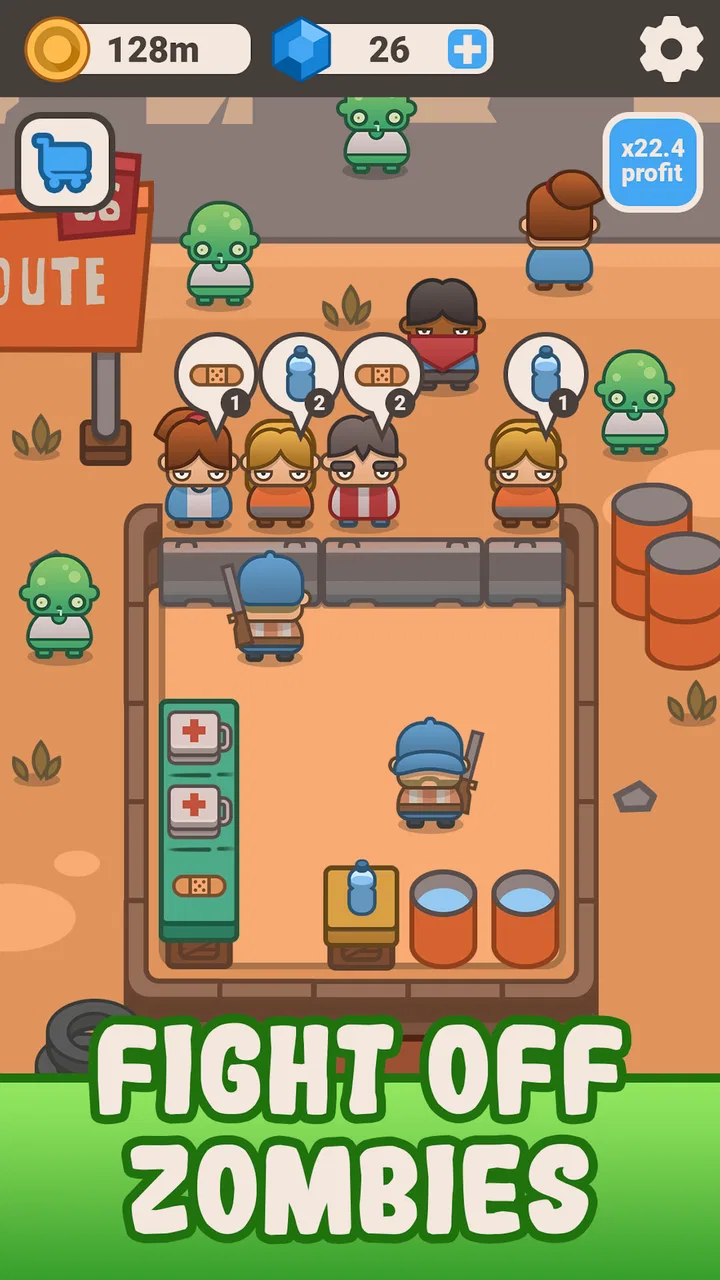
I first approached Wasteland Trade: Idle Zombie expecting a light simulation game built around checking supplies, making a few trades, and returning later to see what changed. That is still the basic appeal, but the interesting part is how the game turns a bleak zombie setting into an economic routine. Instead of focusing only on fighting, it asks me to think about what the wasteland needs, what can be exchanged, and when it is worth taking another look at my growing operation.
Developed by Rockbite Games, this free simulation game is aimed at players who enjoy gradual progress more than constant action. Its setting gives the trading concept a clear identity, while the idle structure makes it easy to play in short bursts. I can open it when I have a spare moment, make a decision, collect the result, and leave with a reason to return. That rhythm is the real foundation of the experience.
The game is rated Everyone, which makes the presentation approachable, but the post-apocalyptic theme still gives the world a little personality. It is not simply a cheerful shop simulator with a different background. The ruined setting makes every exchange feel connected to survival, even when the actual interaction is focused on management rather than direct combat.
You May Also Like

 AccuWeather: Weather Radar
AccuWeather Review: A Quick, Clear Forecast for Everyday Decisions
For everyday plans, the best forecast is the one you can understand quickly. AccuWeather makes rain timing, radar, and local conditions easy to act on, with a few trade-offs.

 Hill Climb Racing
Why Hill Climb Racing Still Turns Crashes Into One More Run
A tiny car, a bumpy hill and one more upgrade: Hill Climb Racing keeps resurfacing because its simple chaos makes every near-miss feel personal.

 AliExpress - Shopping App
AliExpress Makes Global Shopping Feel Personal, but Shoppers Bear the Risk
AliExpress turns a global marketplace into a pocket-sized discovery engine. Its reach is useful, its shopping loop compelling, and its trade-offs easy to miss.

 Lords Mobile: Kingdom Wars
Lords Mobile Is a Kingdom-Building Routine, Not a Quick Match
A case-by-case verdict on the building, battles, device demands, and social commitments that make Lords Mobile rewarding for some players and exhausting for others.

 PDF Scanner app - TapScanner
TapScanner Makes Paperwork Easier to Capture, Check, and Share
TapScanner makes scanning with a phone feel less like a rescue operation and more like a dependable step in getting work done. Its capture tools are useful, though not flawless.

 Block Blast!
 Shows How Much a Puzzle Game Can Leave Out
A quiet grid game shows why puzzle players increasingly value instant clarity, repeatable skill and low-pressure play—and where the genre still needs to catch up.
More From Our News Desk
View All News


How the wasteland trade loop feels in practice
I find the trading loop works best when I treat each visit as a small decision point, not a chore to clear. I look for the choice that will make a later check-in more useful, then stop once I have made it; that keeps the idle pace purposeful without turning it into constant monitoring. That habit also helps me notice where a session can feel stalled, which is worth considering before deciding whether the issue is the game or the setup.
The first action is choosing what deserves attention
The most important early decision is not about rushing through menus. It is deciding which part of the operation should receive attention first. In a game built around trading and idle progress, every resource has a possible use, but not every use is equally valuable at that moment. I found myself looking at the immediate benefit of an exchange while also considering whether holding something back would make the next return more productive.
That gives the opening interaction more weight than a simple collect button. The setting encourages me to think like a survivor running a business: supplies are useful, but they are also leverage. A trade can improve the current situation, yet spending too freely can leave the next cycle feeling less efficient. This is where the simulation category matters. The game is not only asking me to tap; it is asking me to decide what kind of progress I want.
For a new player, my advice is to avoid treating every available action as equally urgent. Take a moment to understand what produces a short-term improvement and what supports a longer chain of progress. The game is easier to enjoy when I make deliberate choices instead of trying to empty every option as soon as it appears.
This is also a useful distinction between Wasteland Trade and a traditional action-heavy zombie game. If you want aiming, dodging, or direct encounters to be the main event, this will feel quiet. Its tension comes from opportunity cost. The question is less “Can I defeat this threat right now?” and more “Will this exchange leave my operation stronger when I return?”
Feedback arrives as a steady rhythm
The feedback loop is built around visible movement from one decision to the next. I take an action, see the result, and use that result to shape the following choice. That sequence is simple, but it works because the game’s theme gives the rewards context. A gain is not just a number increasing; it represents a little more control over an unstable world.
Idle games can easily become passive, with the player checking in only to collect whatever has accumulated. Here, the trading premise gives those check-ins a practical purpose. I am not merely opening the game to watch progress. I am opening it to decide what to do with the progress. That difference keeps the sessions from feeling completely automatic.
The strongest moments come when a small decision improves the next cycle. A modest trade can create a better position for the following visit, and that creates a satisfying chain: action leads to feedback, feedback leads to a new choice, and the new choice makes the next session feel worthwhile. It is a compact version of planning rather than a long-form strategy system.
Still, the rhythm may be too restrained for players who need constant novelty. The game’s appeal depends on enjoying incremental improvement. If you prefer fast changes, dramatic battles, or a campaign with a strong story push, the repeated management pattern may begin to feel predictable. I would not choose it as my main game when I want intensity; I would choose it when I want a low-pressure activity that still gives me something to think about.
Why the reward feels better when it supports the next visit
The rewards are most satisfying when I treat them as tools rather than trophies. A successful exchange matters because it improves the position from which I make the next decision. That makes progress feel connected. The reward closes one small task while opening another, which is exactly what encourages another session.
This structure also makes patience valuable. I do not need to force every possible improvement immediately. Sometimes the better choice is to let the operation develop and return when I can make a more useful decision. For anyone who plays on a phone during commutes, breaks, or between household tasks, that flexibility is a genuine strength.
A realistic everyday scenario is checking the game during a short lunch break. I can review what has changed, use the available result on a trade, and stop before the session becomes a commitment. Later, I have a clear reason to open it again because the previous action was not an isolated tap; it prepared the next stage of the loop. That makes the game suitable for fragmented play rather than requiring a long uninterrupted sitting.
My practical tip is to judge a reward by what it enables, not only by how large it looks. A smaller gain that improves the next cycle can be more useful than an immediate exchange that leaves me with fewer options. This is one of the more interesting trade-offs in the game, and it is easy to miss if I play only for instant collection.
The session resets without feeling like a complete stop
One reason idle games work is that a session can end without the sense that progress has been abandoned. I can close the app after making a decision and come back later to continue from the consequences of that decision. The reset is therefore less about starting over and more about creating a pause in the management cycle.
That pause is important because it keeps the game from demanding constant attention. I can finish a short visit with a clear sense of what I changed and what I want to inspect next time. The best idle design gives me a reason to leave and a reason to return, and this game’s wasteland economy provides that basic structure.
There is a trade-off, though. The same relaxed pacing that makes the game convenient can make a session feel thin if I expect a large amount of content every time I open it. It is better understood as a recurring habit than as a sequence of long, dramatic play periods. Players who dislike waiting between meaningful decisions should consider that carefully before installing it.
I also recommend setting a personal stopping point. Because the loop is designed to continue, it can be tempting to keep checking for one more improvement. Ending after a useful trade or a clear upgrade keeps the experience pleasant. The game works best as a small part of the day, not as something that must occupy every spare minute.
What the game does differently from familiar simulation alternatives
Compared with a conventional city-building simulation, Wasteland Trade places more emphasis on exchange and return visits than on designing a large settlement. I am not approaching it primarily as an architect. The satisfaction comes from improving an operation through decisions, watching the consequences, and gradually making the wasteland economy feel more manageable.
Compared with farming or shop-management games, the zombie setting gives the loop a rougher tone. The theme makes the idea of scarcity and negotiation feel natural. I am not simply expanding a pleasant business; I am imagining a market operating after society has broken down. That atmosphere helps the otherwise modest actions feel more purposeful.
Compared with action zombie games, the difference is even clearer. The game is a better fit for someone who enjoys planning, accumulation, and short check-ins than for someone looking for direct survival pressure. If your favorite part of zombie games is combat, this may work only as a change of pace. If you like the idea of managing the world around the survivors, it offers a more suitable angle.
The trade-off is that the game’s identity depends heavily on its loop. There is no reason to expect it to replace a deeper strategy simulation or a story-driven adventure. Its strength is focus: a post-apocalyptic trading routine that can be followed in manageable sessions. That narrow scope is a benefit for the right player and a limitation for everyone else.
Small habits that make the loop more rewarding
I get better results when I treat each visit as a planning checkpoint. Before tapping through the available actions, I ask what I want the next session to look like. Do I need immediate progress, or would a more patient choice leave the operation in a healthier position? That question prevents the game from becoming a reflexive collection routine.
Another useful habit is to notice the difference between progress that feels visible and progress that is strategically useful. A quick improvement can be satisfying, but it may not strengthen the broader cycle. The game rewards players who can tolerate a little restraint, especially when the best result comes from preparing rather than spending.
I also find that the game suits a “one purpose per visit” approach. I might open it to make a trade, inspect the result, and leave. On another visit, I might focus on improving the next return. This keeps the experience organized and reduces the feeling that I am wandering through a collection of unrelated taps.
These habits are not complicated, but they reveal the game’s deeper appeal. The challenge is not hidden behind difficult controls. It comes from learning how to value timing, how to interpret feedback, and how to stop at the right moment. That is a more thoughtful experience than the short store summary might suggest.
Who will enjoy it, and who should skip it
I would recommend this game to players who like idle simulations with a strong theme, especially those who want a management experience that can be played in short sessions. It suits people who enjoy watching a small decision grow into a better future position. It is also a good option for anyone who likes zombie fiction but wants something calmer than combat-focused games.
It is less suitable for players who need constant hands-on interaction. If you want every minute to contain a new challenge, the waiting and repeated return structure may feel too slow. The same applies if you are looking for a detailed economic sandbox with extensive customization. This game’s appeal comes from a focused loop, not from overwhelming complexity.
The free entry point makes it easy to try, but the presence of in-app purchases ranging from $0.99 to $250.00 per item means I would approach spending carefully. I prefer to understand how satisfying the normal progression feels before considering any purchase. For a game built around patience and repeated sessions, spending can change how I experience the very waiting that gives the loop its character.
That does not make the purchase system an automatic deal-breaker, but it does make self-control part of the recommendation. Players who want a completely purchase-free experience should be cautious. Players who are comfortable treating optional spending as a personal limit can enjoy the free starting point while deciding whether the game earns more of their time.
Device fit, maturity, and current state
The game supports Android devices running version 7.0 or later, so it is available to a broad range of compatible phones and tablets. That makes it practical as a casual companion game, particularly for people who do not want to reserve their newest device for a simple management experience.
Its Everyone age rating also makes the presentation broadly accessible. The setting is post-apocalyptic, but the game’s central appeal is trading and simulation rather than graphic horror. I would still choose based on personal comfort with zombie themes, yet the rating reflects how approachable the overall experience is.
The current version is 0.1.10, which places the game in an early phase of its development. I see that as a reason to judge it by the quality of its central loop rather than by expecting the breadth of a long-established simulation. The foundation is what matters most here: does the action create useful feedback, does the reward encourage another visit, and does the reset feel comfortable rather than empty?
Its audience is already meaningful, with over 100 thousand installs and a 4.2 average from around 2.3 thousand ratings. Those figures suggest that the concept has found interest among players, but I would still make the decision based on your preferred pace. Popularity cannot turn a slow idle loop into an action game, and this title is most convincing when approached on its own terms.
My verdict on the complete action-feedback-reward-reset cycle
After spending time with Wasteland Trade: Idle Zombie, I see it as a focused simulation built around a simple but effective question: what should I do now so that my next visit is better? The first action is a trade or management decision, the feedback shows whether that choice helped, and the reward gives me a stronger position to work from. When I close the game, the session has not really failed; it has created the setup for another return.
The game’s real strength is the connection between a small action and a believable reason to come back. The zombie setting adds character, while the idle format respects short attention spans. I like that it can fit into an ordinary day without demanding a long sitting, and I appreciate that the most interesting choices involve timing rather than frantic input.
My reservations are equally clear. The pace will not satisfy everyone, the loop can become repetitive if I want constant novelty, and the wide range of in-app purchase prices makes spending discipline important. It is also not a substitute for a deep city builder, a full economic sandbox, or a combat-oriented zombie game.
For me, it works best as a compact, atmospheric management game: open it, make a thoughtful decision, collect the consequence, and leave with a reason to return. If that cycle sounds appealing, this free release from Rockbite Games is worth trying. If you need every session to deliver action or major change, I would look elsewhere. Wasteland Trade: Idle Zombie earns its place through consistency, not spectacle, and that is exactly why it can become an easy game to revisit.
FAQs for Wasteland Trade: Idle Zombie
01What is Wasteland Trade: Idle Zombie about?
Wasteland Trade: Idle Zombie is a post-apocalyptic idle management game in which you build up a trading operation while surviving in a world overrun by zombies. You collect supplies, manage resources, improve facilities, recruit or develop survivors, and expand your influence across dangerous locations. Progress continues through automated systems, making it suitable for players who enjoy strategy without constant active control.
02Is Wasteland Trade: Idle Zombie free to download and play?
The game is generally available as a free download, allowing players to begin building their wasteland operation without paying upfront. However, free-to-play elements may include optional purchases for premium currency, resource bundles, upgrades, or time-saving items. Progress can usually be made without spending money, although patience may be required as timers, difficulty, and resource demands increase later in the game.
03Does Wasteland Trade: Idle Zombie require an internet connection?
An internet connection may be needed for the best experience, particularly when synchronizing progress, accessing advertisements, receiving events, downloading updates, or using online features. Some idle activities may continue while the app is closed, but offline functionality can be limited and may vary by device or game version. Players should not assume that every feature works reliably without an active connection.
04Is Wasteland Trade: Idle Zombie suitable for casual players?
Yes, the idle structure makes Wasteland Trade: Idle Zombie approachable for casual players who prefer checking in occasionally rather than playing continuously. Automated production and resource generation help maintain progress while you are away. Nevertheless, the game still includes strategic decisions involving upgrades, trading, survivor development, and expansion, so players who enjoy planning can remain engaged beyond simply collecting idle rewards.
05Are there advertisements or in-app purchases in Wasteland Trade: Idle Zombie?
Players should expect the possibility of advertisements and optional in-app purchases, as these are common features in free idle games. Advertisements may offer bonus rewards, faster progress, or additional resources, while purchases can provide premium currency and convenience items. Before downloading, review the store listing and your device’s purchase settings, especially if children may access the game.
Pros
- Easy-to-learn idle mechanics make it accessible for casual players.
- Offline progress lets you earn resources even when you are not playing.
- Trading and base upgrades provide a satisfying sense of long-term progression.
- Zombie-themed visuals and sound effects create a fitting post-apocalyptic atmosphere.
- Short play sessions work well for quick breaks or mobile gaming on the go.
Cons
- Progress can feel slow without frequent upgrades or extended idle periods.
- Repeated missions and resource collection may become predictable over time.
- Some upgrades and rewards may encourage watching ads or making purchases.
- The small-screen interface can feel crowded when managing several systems.
- Players seeking action-focused combat may find the gameplay too passive.

Wasteland Trade: Idle Zombie
Gallery